Test an idea before you trust it

Event-driven backtests with commissions, spreads, slippage and latency, walk-forward and out-of-sample tests, a Strategy Lab with validation gates and a paper forward track, and the Quant Lab for volatility, factor and risk models.

6 of 7 available

How you work in this area

01

A model, its inputs and its assumptions

What you see
A pricing model in the Engineers Desk, here Black-Scholes-Merton, with every input, its valid range and the model's assumptions.
What you can do
Run it with your own inputs and save the configuration under a name.
Form for a Black-Scholes-Merton price: spot, strike, days, rate, carry, option type and volatility, with Run and Save buttons
The inputs of a Black-Scholes-Merton run.Real capture

02

A result you can reproduce

What you see
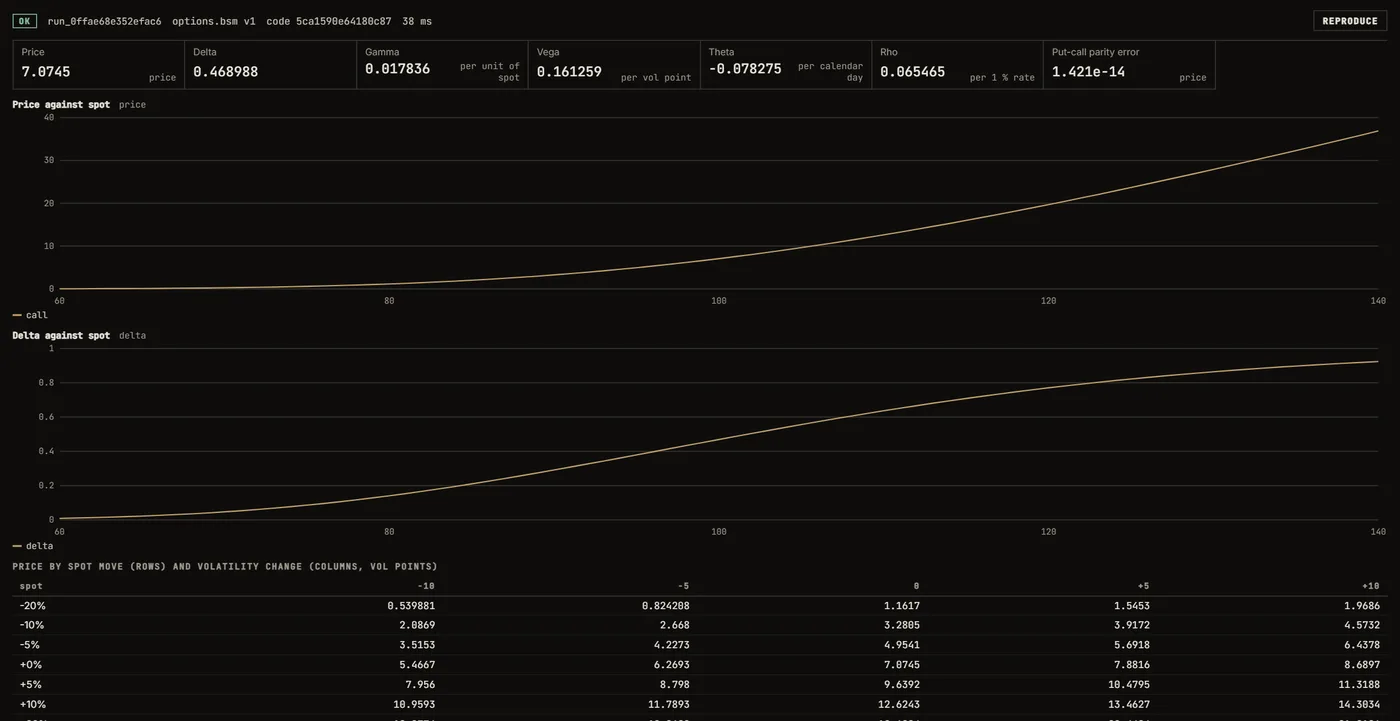
Price and greeks, price and delta against spot, and a price grid by spot move and volatility change, with the run's model version and code hash.
What you can do
Repeat any run from what it recorded, and compare it with the next one.
Result of an options pricing run: price, delta, gamma, vega, theta and rho, two charts against spot and a price grid
The result of the run, with its identifier and code hash.Real capture

03

Portfolio statistics

What you see
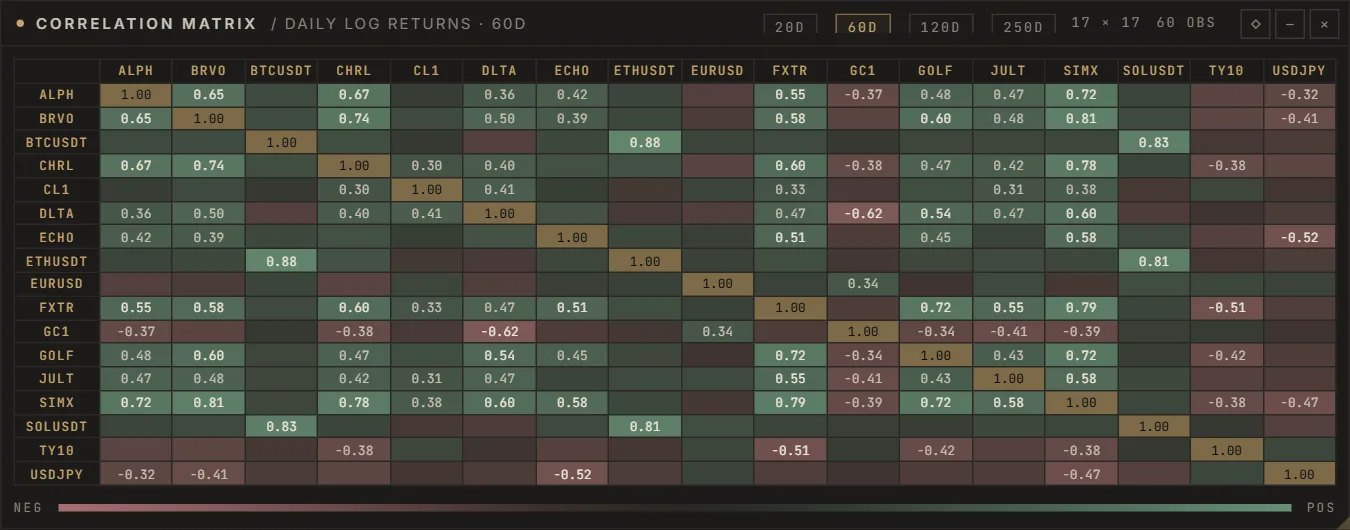
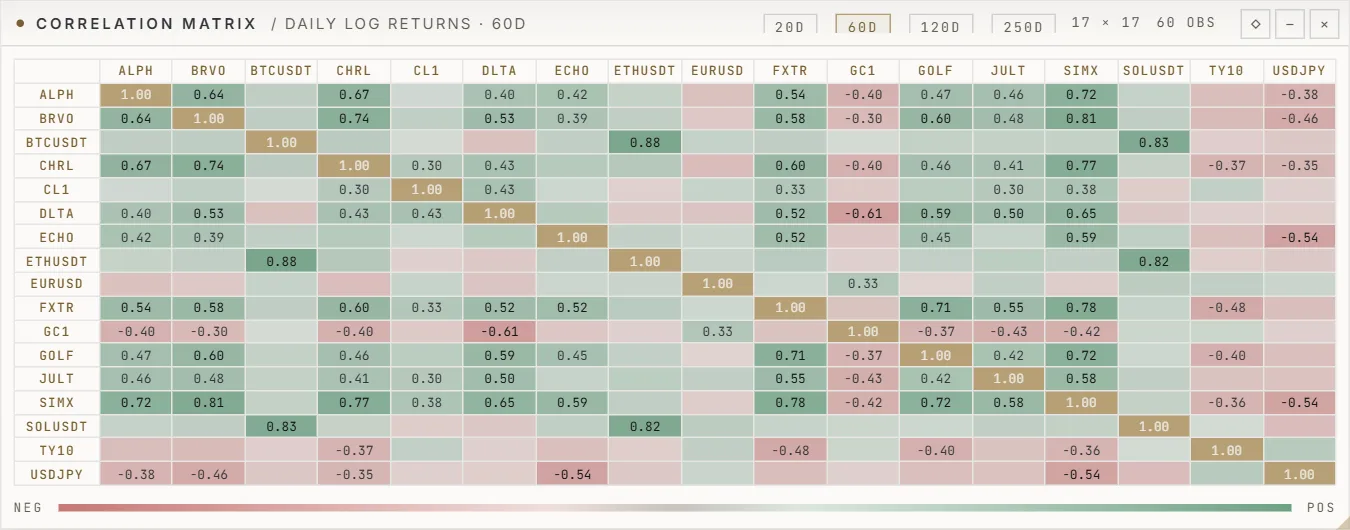
The correlation across the instruments of a book.
What you can do
Go on with GARCH volatility, factor models, HRP and risk parity, Monte Carlo, the bootstrap, PBO and the deflated Sharpe ratio.
Correlation matrix of the instruments in a portfolioCorrelation matrix of the instruments in a portfolio
A correlation matrix of a portfolio.Real captureSim

04

Options

What you see
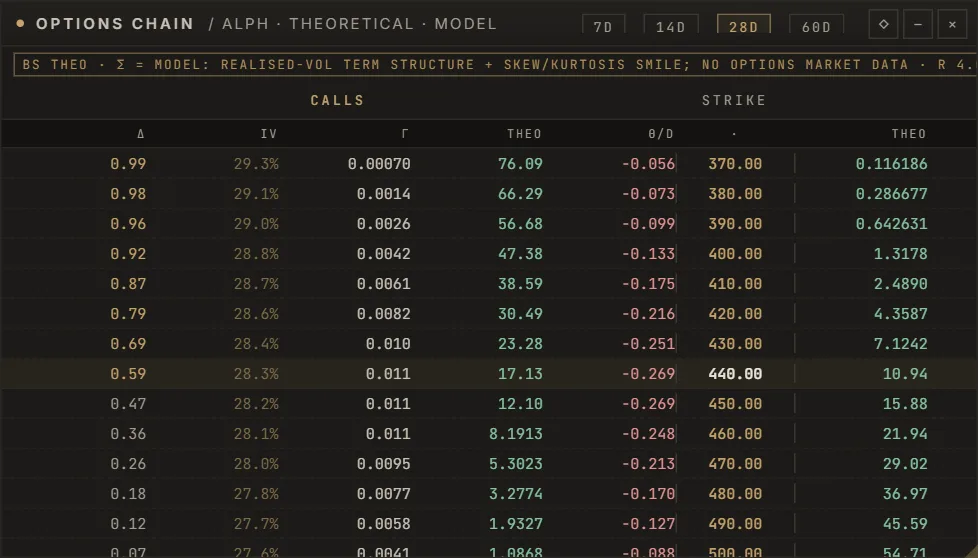
Option chains with theoretical values and greeks per strike: delta, implied volatility, gamma and daily theta.
What you can do
Study the implied volatility surface, its skew and its term structure.
Theoretical option chain: delta, implied volatility, gamma, theoretical value and daily theta for each strike
A theoretical chain for a simulated instrument; the panel states that it uses no options market data.Real captureSim

Every function in this area

Taken from SwiftTrade's feature register, with the plan each belongs to and its state today. Nothing is on sale yet: during the test phase SwiftTrade is free.

FunctionWhat it doesPlanStateLimit
BacktestingEvent-driven backtests with commissions, spreads, slippage and latency; walk-forward and out-of-sample tests.QuantAvailable—
Strategy LabStrategy versions with parameters, data source and validation gates, then a paper forward track.QuantAvailable—
Quant LabGARCH volatility, factor models, HRP and risk parity, Monte Carlo, bootstrap, PBO and the deflated Sharpe ratio.QuantAvailable—
Regime and Markov modelsHidden-Markov regimes, Markov-switching volatility and discrete market-state transition matrices.QuantAvailable—
AI research assistantA research assistant that answers from SwiftTrade's own data and cites every tool result; it cannot trade.QuantAvailable—
Options analyticsOption chains, greeks, implied volatility surface, skew and term structure.QuantPartly builtBTC and ETH options from Deribit (free public data); equity options need OPRA data (paid)
API accessPersonal API tokens for the documented REST API and WebSocket stream.QuantAvailable—

What to keep in mind

A backtest is not evidence of future returns. Its result depends on the data, the cost model and the out-of-sample check.

Options analytics cover Bitcoin and Ether options from Deribit's free public data; equity options need paid OPRA data.

The AI research assistant answers from SwiftTrade's own data and cites every tool result. It cannot trade.

See it in the terminal

The terminal runs in your browser during the test phase, with paper trading and nothing to install.